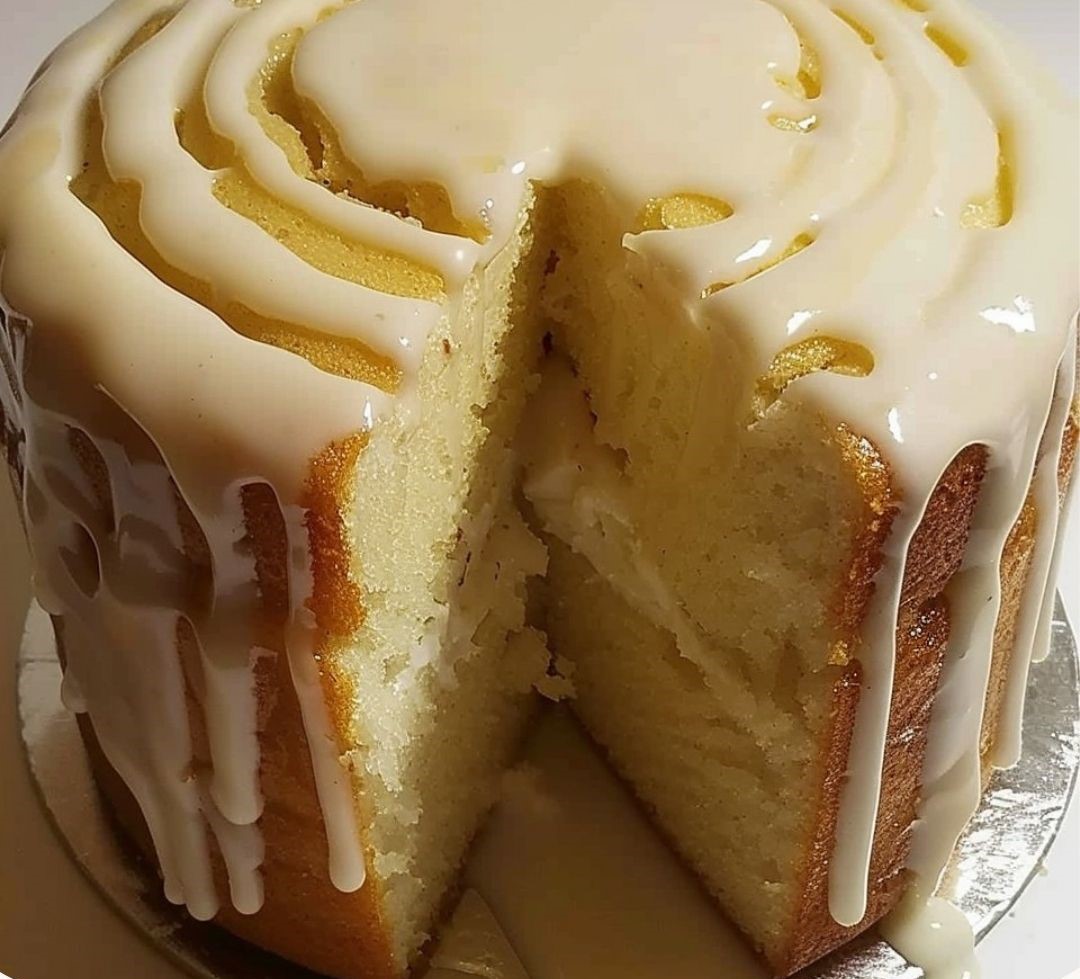
A tender, buttery pound cake soaked in warm vanilla and topped with a silky cream cheese glaze. Simple, timeless, and utterly irresistible.
Why you’ll fall in love
This cake strikes the perfect balance: dense but tender crumb, warm vanilla aroma, and a tangy-sweet cream cheese glaze that makes every bite both cozy and indulgent. One slice and you’ll understand why it becomes a go-to for tea time, birthdays, or a comforting midnight treat.
Equipment (tools) you’ll need
- 8-inch round cake pan or 9-inch Bundt pan (greased and floured)
- Electric mixer (stand or hand) or strong wooden spoon and elbow grease
- Mixing bowls (one medium, one large)
- Measuring cups and spoons (or a kitchen scale)
- Rubber spatula
- Whisk
- Cooling rack
- Toothpick or cake tester
Ingredients (accurate quantities)
For the Cake
- 2 ½ cups (315 g) all-purpose flour
- 1 tsp baking powder
- ½ tsp baking soda
- ½ tsp salt
- 1 cup (227 g) unsalted butter, softened
- 2 cups (400 g) granulated sugar
- 4 large eggs, at room temperature
- 1 tbsp pure vanilla extract
- 1 cup (240 ml) buttermilk, at room temperature
For the Cream Cheese Glaze
- 4 oz (113 g) cream cheese, softened
- 1 ½ cups (180 g) powdered (confectioners’) sugar, sifted if lumpy
- 2–3 tbsp milk or heavy cream (adjust for consistency)
- 1 tsp vanilla extract
Step-by-step method (follow exactly for best results)
1. Prep the oven and pan
Preheat the oven to 350°F (175°C). Grease and lightly flour an 8-inch round pan or Bundt pan. Tap out excess flour.
2. Combine dry ingredients
In a medium bowl, whisk together the flour, baking powder, baking soda, and salt. Set aside.
3. Cream butter and sugar
In a large mixing bowl, beat the butter and granulated sugar with an electric mixer on medium-high until pale and fluffy, about 3–4 minutes. This aeration gives the crumb lift — don’t rush it.
4. Add the eggs & vanilla
Add the eggs one at a time, mixing well after each addition so the batter remains emulsified. Stir in the vanilla extract.
5. Combine wet and dry, alternating with buttermilk
With the mixer on low, add the dry ingredients in three additions, alternating with the buttermilk in two additions (dry — buttermilk — dry — buttermilk — dry). Begin and end with the dry ingredients. Mix just until combined — overmixing develops gluten and makes the cake tough.
6. Bake
Pour the batter into the prepared pan and smooth the top. Bake 50–60 minutes (time varies with pan type) until a toothpick inserted in the center comes out clean or with a few moist crumbs. If the top browns too quickly, tent loosely with foil for the last 15 minutes.
7. Cool
Let the cake cool in the pan for 10 minutes, then invert onto a cooling rack and cool completely before glazing. Glaze a warm cake and it will sink in; glaze a cooled cake for the best finish.
8. Make the cream cheese glaze
Beat the softened cream cheese until smooth. Gradually add the powdered sugar, then add milk or cream 1 tbsp at a time to reach a pourable consistency. Stir in vanilla. If too thin, add a little more powdered sugar; if too thick, thin with a splash more milk.
9. Glaze the cake
Pour the glaze over the cooled cake, letting it drip down the sides for that luscious look. Allow glaze to set for 10–20 minutes before slicing.
Tips to guarantee success (texture & flavor)
- Room temperature ingredients: Eggs, butter, and buttermilk should be at room temp for even mixing and better rise. Cold ingredients can cause curdling and a denser cake.
- Measure flour correctly: Spoon flour into the measuring cup and level it off (or weigh 315 g). Too much flour = heavy cake.
- Do not overmix: Once you add flour, mix until just combined. Overworking the batter creates gluten that makes the cake chewy.
- Use real vanilla: Pure vanilla extract elevates the aroma far more than artificial flavoring.
- Watch your bake time: Ovens vary — start checking at 45 minutes. A toothpick with a few moist crumbs is perfect; completely dry means slight overbake.
- Buttermilk swap: If you don’t have buttermilk, make a quick substitute: 1 cup milk + 1 tbsp white vinegar or lemon juice, let sit 5 minutes.
Variations & add-ins (ideas to suit different tastes)
- Lemon-vanilla: Add 1 tbsp lemon zest to the batter and swap 1 tsp vanilla for lemon extract; finish with lemon glaze.
- Vanilla-Almond: Substitute 1 tsp almond extract for half the vanilla; sprinkle slivered almonds on the glaze.
- Berry swirl: Fold 1 cup fresh blueberries (tossed in 1 tbsp flour) into the batter gently before baking.
- Chocolate ribbon: Drop tablespoons of chocolate ganache and swirl lightly for a marbled effect.
- Spiced: Add ½ tsp ground cardamom or 1 tsp cinnamon for warm complexity.
- Reduced sugar: Reduce sugar to 1 ¾ cups if you prefer less sweetness — the texture will still be good because of the butter.
Storage & reheating (keep it tasting fresh)
- Room temperature: Store the glazed cake covered loosely with a cake dome or airtight container for 1–2 days at room temperature. Keep away from direct heat.
- Refrigeration: Because of the cream cheese glaze, refrigerate if you plan to keep it beyond 48 hours; store in an airtight container for up to 4–5 days. Bring to room temp before serving for best flavor (20–30 minutes).
- Freezing: For longer storage, freeze un-glazed cake (wrap tightly in plastic and foil) for up to 3 months. Thaw overnight in the fridge and add freshly made glaze before serving. Never freeze with the glaze—it weeps on thaw.
- Reheating slices: Warm individual slices in the microwave for 10–12 seconds or in a 325°F (160°C) oven for 6–8 minutes (wrapped in foil) to regain that freshly-baked sensation.
Approximate nutrition (per serving) — estimated
Serving size: 1 slice (assuming 12 servings per cake). Values are approximate.
- Calories: ~485 kcal
- Carbohydrates: ~69 g
- Fat: ~20 g
- Protein: ~5.8 g
(These are rough estimates based on ingredient totals — adjust if you change portions, pan size, or ingredients.)
Timings
- Active prep time: 20 minutes
- Baking time: 50–60 minutes
- Cooling & glazing: 30–40 minutes (cool completely before glazing)
- Total time: ~1 hour 40 minutes – 2 hours (including cooling)
Frequently Asked Questions (quick answers)
Q: Can I use a loaf pan instead of a round/Bundt?
A: Yes. Use a 9×5-inch loaf pan; baking time will change — check at 45–55 minutes and expect slightly different texture and shorter height.
Q: My cake sank in the middle. Why?
A: Common reasons: underbaked center, too much leavening, opening the oven door too early, or batter over-beaten after adding flour. Check oven temp with a thermometer and test early.
Q: Why is my cake dry?
A: Overbaking or too much flour. Check for doneness early and measure flour by weight (315 g is best).
Q: Can I make this dairy-free?
A: Replace butter with a high-quality dairy-free butter and use a dairy-free buttermilk (plant milk + vinegar). For the glaze, use a vegan cream cheese alternative and adjust sweetness.
Q: How do I make the glaze smooth (no lumps)?
A: Ensure cream cheese is fully softened and beat until silky before adding powdered sugar. Sift powdered sugar if lumpy and add milk gradually.
Final nudge
If you’re anything like me, you’ll find yourself stealing a slice warm from the rack — the buttery crumb, the gentle tang from buttermilk, and that velvet cream cheese glaze make it almost impossible not to. Try baking it once for company, and then again for yourself. It’s the kind of cake that makes small moments feel celebratory.