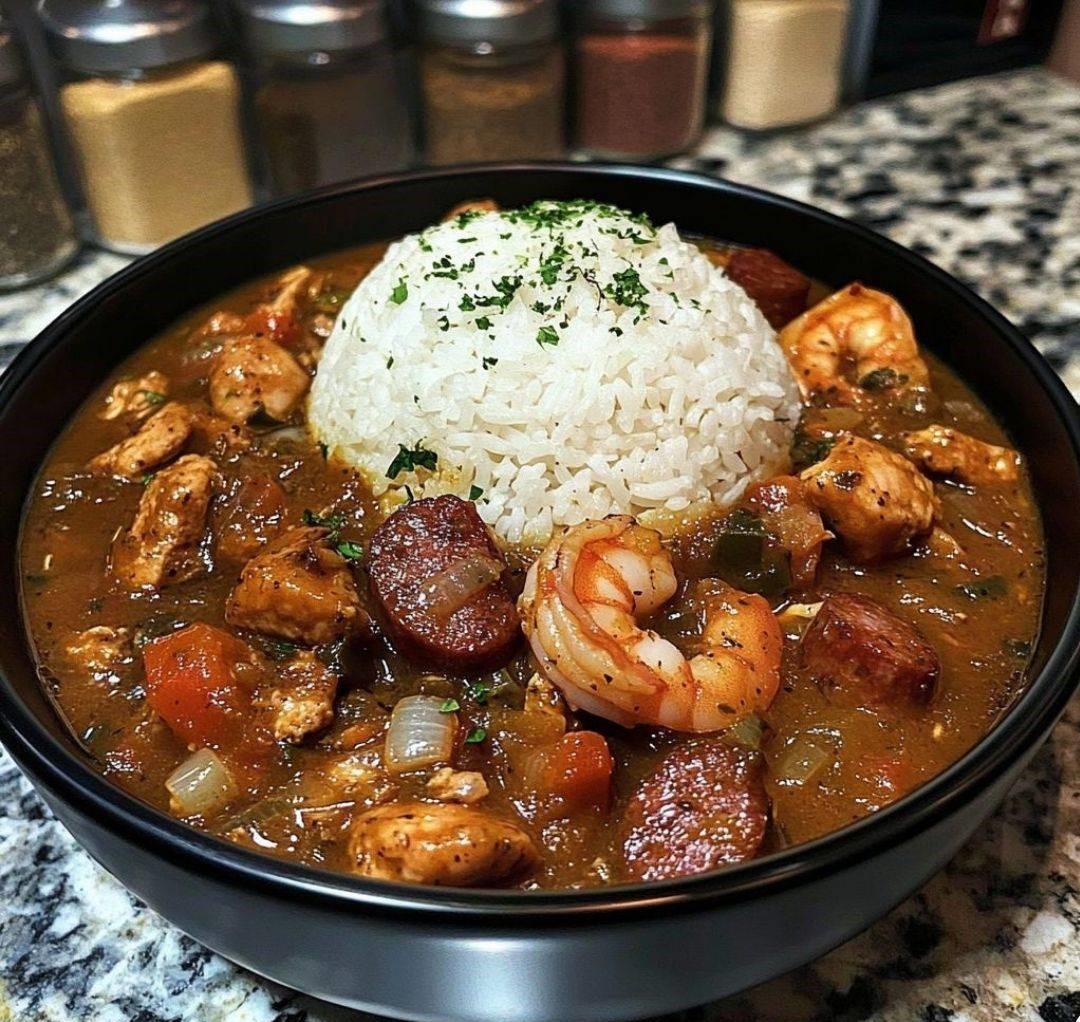
A rich, soulful stew with a dark roux, smoky sausage, tender chicken and plump shrimp. Step-by-step recipe, pro tips, storage and nutrition (serves 6).
Why you’ll fall in love with this Creole Gumbo
This gumbo is the kind of dish that arrives on the table with a warm exhale — bold, comforting, and honest. The long, nutty roux gives it depth; the trio of sausage, chicken and shrimp layers smoky, savory and briny notes that make every spoonful irresistible. It’s a bowl that invites conversation, seconds, and the slow appreciation of home cooking done right.
Tools you’ll nee
- Large heavy-bottomed pot or Dutch oven (6–8 qt)
- Wooden spoon or heatproof spatula (for stirring the roux)
- Chef’s knife and cutting board
- Measuring cups and spoons
- Ladle and tongs
- Bowls for mise en place
- Rice cooker or pot for cooking white rice
Ingredients (serves 6
- 1/2 cup vegetable oil
- 1/2 cup all-purpose flour
- 1 large onion, chopped (about 1 1/2 cups)
- 1 green bell pepper, chopped (about 1 cup)
- 2 celery stalks, chopped (about 1 cup)
- 4 cloves garlic, minced
- 1 lb (454 g) andouille sausage, sliced
- 1 lb (454 g) boneless, skinless chicken thighs, cut into 1-inch cubes
- 1 lb (454 g) shrimp, peeled and deveined (medium/large)
- 1 (14.5 oz / ~411 g) can diced tomatoes (undrained)
- 4 cups (about 960 ml) chicken broth
- 2 bay leaves
- 1 tsp dried thyme
- 1 tsp paprika
- 1/2 tsp cayenne pepper (optional — adjust to taste)
- Salt and freshly ground black pepper, to taste
- 2 tbsp chopped fresh parsley (for finishing)
- Cooked white rice, for serving (estimate 1 cup cooked rice per person)
Step-by-step instructions
1. Prep (mise en place)
Chop the onion, bell pepper and celery finely so they cook evenly. Cube the chicken, slice the sausage, and have the shrimp peeled, deveined and pat-dry. Measure spices and open the can of tomatoes.
2. Make the roux (foundation of the gumbo)
- Place your Dutch oven over medium heat. Add the 1/2 cup vegetable oil.
- Whisk in the 1/2 cup all-purpose flour to form a smooth slurry.
- Stir CONSTANTLY with a wooden spoon or heatproof spatula. The roux will go from pale to tan to peanut-butter brown and finally to a deep chocolate brown. This takes about 15–20 minutes.
- If the roux starts to smell acrid or smoke heavily, lower the heat. Patience is key — a deep brown roux gives classic gumbo its flavor.
Pro note: The roux is forgiving but finicky — keep the heat steady and stir without stopping.
3. Cook the vegetables
Once the roux is a deep brown and aromatic, immediately add the chopped onion, bell pepper and celery (the “holy trinity”). The roux will bubble up — stir and cook until the vegetables are softened, about 4–5 minutes. Add the minced garlic and cook 30–60 seconds until fragrant.
4. Brown the meats
Add the sliced andouille sausage and cook 2–3 minutes to render some fat and brown the edges. Add the cubed chicken thighs and cook until they’re lightly browned on the outside (about 4–5 minutes). You are not cooking the chicken through yet — just building flavor.
5. Build the gumbo base
Stir in the can of diced tomatoes (with juices), 4 cups chicken broth, bay leaves, dried thyme, paprika, cayenne (if using), and a generous pinch of salt and black pepper. Scrape the bottom of the pot to loosen any browned bits. Bring to a boil.
6. Simmer gently
Reduce heat to low, cover partially, and simmer for about 45 minutes, stirring occasionally. The chicken will tenderize and the flavors will marry — the roux will thicken the broth into a silky, dark gumbo.
7. Add the shrimp
After the simmer, stir in the peeled shrimp and simmer uncovered 5–7 minutes until the shrimp are opaque and pink. Taste and adjust seasoning. Remove bay leaves.
8. Finish and serve
Stir in 2 tablespoons chopped parsley. Ladle gumbo over hot cooked white rice. Serve immediately with extra parsley and cracked black pepper.
Tips for guaranteed success
- Roux patience: Stir constantly and keep the heat at medium or medium-low. Rushing with higher heat risks burning — burnt roux tastes bitter and will spoil the pot.
- Consistency control: If the gumbo becomes too thick, add a splash of hot chicken broth or water until you reach the desired sauciness. If too thin, simmer uncovered a bit longer to reduce.
- Layer seasoning: Salt and pepper at multiple stages (after browning meats, after the simmer) gives a more balanced final taste.
- Sausage choice: High-quality andouille adds smoke; if unavailable, use smoked kielbasa or a smoked pork sausage.
- Shrimp timing: Add shrimp last so they stay tender — overcooked shrimp become rubbery.
- Acidity balance: If the gumbo tastes flat, a squeeze of lemon juice or a dash of hot sauce brightens the bowl at the end.
Variations & additions
- Vegetarian gumbo: Replace meats with smoked tofu, mushrooms and okra; use vegetable broth and add more tomatoes.
- More heat: Increase cayenne or add Cajun seasoning; serve with hot sauce on the side.
- Okra gumbo: Add 1–2 cups sliced fresh or frozen okra during the simmer — it thickens naturally and adds classic texture.
- Seafood-heavy: Omit chicken; add a mix of crabmeat, scallops and shrimp (add delicate seafood last).
- Rice alternative: Serve over brown rice or cauliflower rice for a lighter twist.
Storage & reheating
Refrigerator: Cool to room temperature, transfer to an airtight container, and refrigerate up to 3–4 days. Gumbo often tastes even better on day two as flavors meld.
- Freezer: Freeze in airtight containers (leave some headspace). Keeps up to 3 months. Thaw overnight in the refrigerator before reheating.
- Reheating: Gently reheat on the stovetop over low heat, stirring often. Add a little broth or water if the gumbo has thickened during storage. If frozen, thaw fully before reheating for even warming.
Approximate nutrition (per serving — recipe yields 6 servings; values INCLUDE 1 cup cooked white rice per serving)
These are approximate estimates, calculated from common nutrition averages and rounded — treat them as a guideline, not lab-accurate values.
- Calories: ~877 kcal per serving
- Protein: ~52 g per serving
- Fat: ~47 g per serving
- Carbohydrates: ~57 g per serving
- Fiber: ~2–4 g (depends on rice and added veg)
- Sodium: variable — depends heavily on sausage and broth; consider low-sodium broth or rinsing sausage to reduce salt.
Note: If you omit rice, per-serving calories drop to roughly 675–700 kcal and carbs to ~12–15 g.
Prep and cooking times
- Active prep time: 20 minutes (chopping, measuring)
- Roux time: 15–20 minutes (active stirring)
- Simmer time: 45 minutes
- Shrimp finish: 5–7 minutes
- Total time (approx): 1 hour 20 minutes (from start to table)
Frequently Asked Questions (FAQs)
Q: Can I use all-purpose flour to thicken or is there another option?
A: The traditional gumbo uses a flour-and-oil roux. For gluten-free, substitute a gluten-free flour blend (behaves similarly) or use a cornstarch slurry added at the end — but the authentic nutty flavor of a browned flour roux will be different.
Q: My roux looks lumpy — what did I do wrong?
A: Lumps form if the oil and flour weren’t well combined at the start or heat fluctuated. Strain the roux through a fine sieve if needed and continue, but aim for a smooth paste when you first mix oil and flour.
Q: Can I make gumbo in advance?
A: Yes — gumbo often improves after a day as flavors meld. Reheat slowly on the stovetop and add a splash of broth to loosen if needed.
Q: How spicy is this gumbo?
A: The recipe includes 1/2 tsp cayenne (optional). Adjust up or down to match your preference, and remember that andouille and some broths add salt and heat too.
Q: Why did my gumbo separate or look oily?
A: If excess fat from the sausage or chicken isn’t balanced, let the gumbo cool slightly and skim excess oil from the surface. Also ensure the roux cooked properly — an undercooked roux may not emulsify as well.
Q: Is okra required?
A: No — okra is traditional in many gumbos as a thickener and flavor, but this recipe relies on the roux for thickening. Add okra if you like its texture and flavor.
Final encouraging note
Make this gumbo with attention and patience — especially during that quiet, stirring-the-roux moment. The payoff is a bowl that’s soulful, complex and generous. Invite friends, ladle it over steaming rice, and watch how simple ingredients become something unforgettable.